Avalon Gardens
Regenerative Agriculture
Pasture-Raised
Chickens
Raised on living Sonoran Desert pasture, open sky, and the rhythms of the land — producing meat that is measurably different from factory-raised alternatives.
Soil & Ecosystem Health
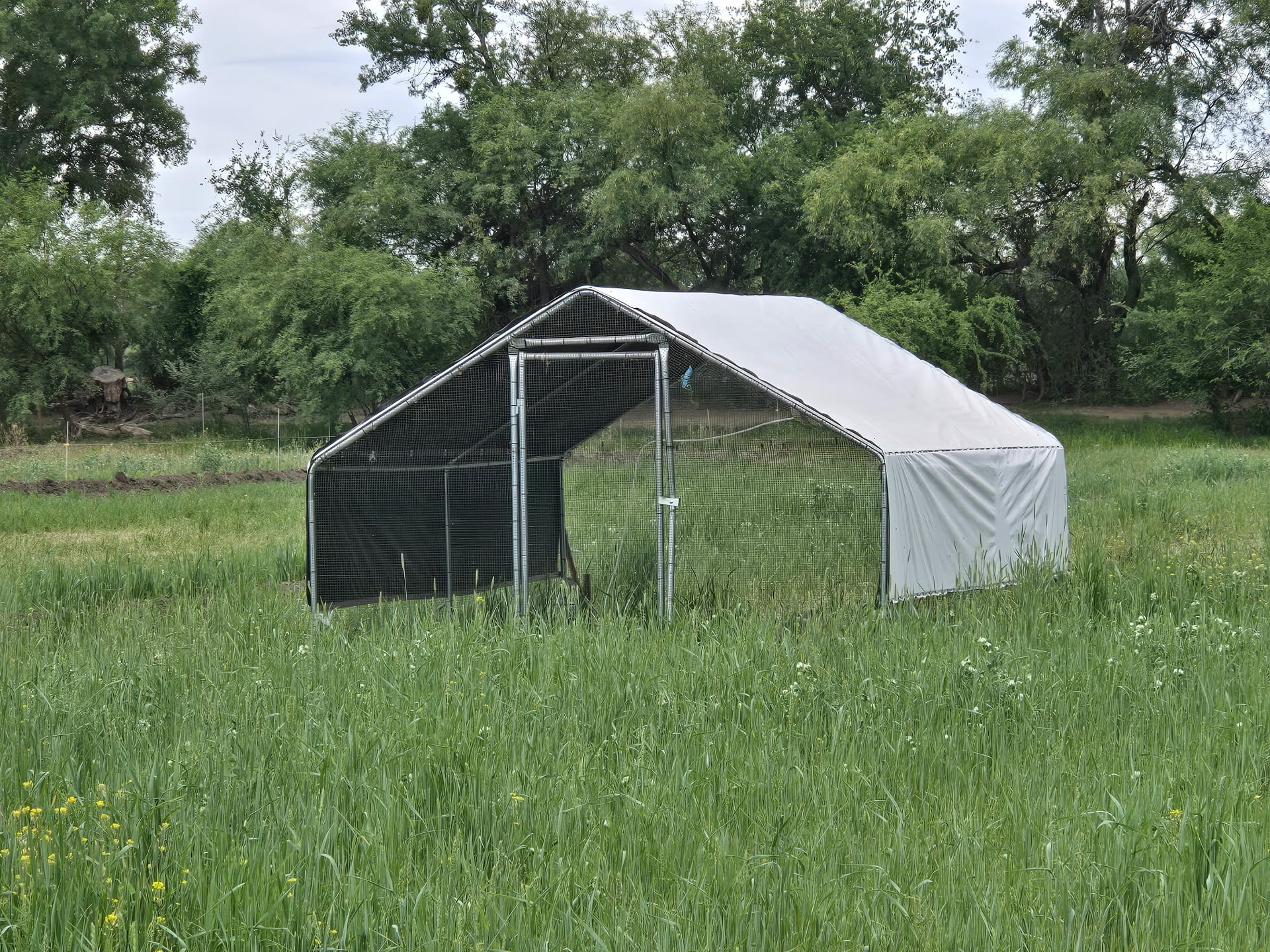
At Avalon Gardens, chickens are not a factory product — they are a restoration tool. Moved across our pastures in mobile shelters, each flock scratches, pecks, and fertilizes as it goes, breaking pest cycles and depositing a balanced mix of nitrogen, phosphorus, and potassium directly into the topsoil.
A global meta-analysis of grazing impacts found that well-managed rotational grazing improves soil organic carbon and reduces soil compaction compared to continuous grazing.[2] Managed poultry integration on pasture follows the same principles — the key is rotation frequency and stocking density, both of which we track carefully across our paddocks.
The Sonoran Desert grasslands of the Santa Cruz Valley support a diverse mix of native grasses, forbs, and legumes that broilers actively forage. This botanical diversity directly enriches the birds' diet — and, as the research on broiler meat confirms, what they eat becomes measurably present in the food you eat.[1]
Animal Welfare
Natural Behaviors Fully Expressed
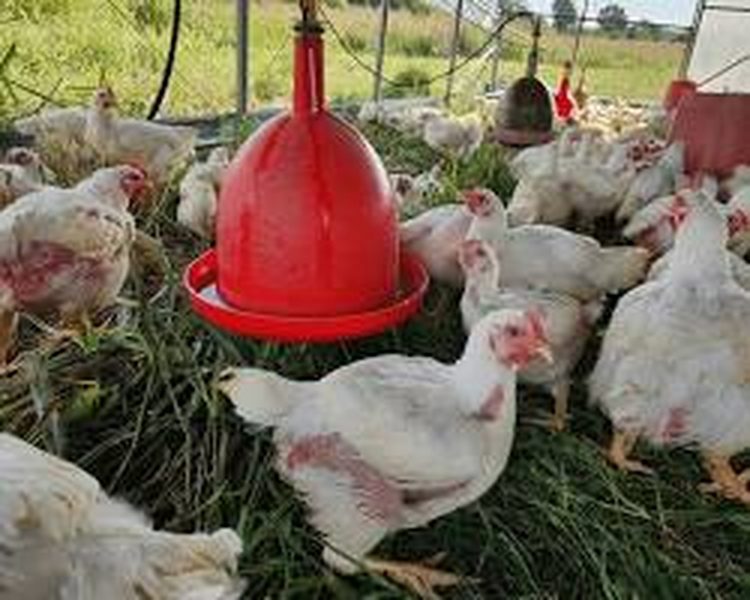
- Dust bathing in natural desert soil
- Foraging for grubs, insects, and seeds
- Social flock structure intact
- No beak trimming — forage enrichment prevents pecking
- No growth hormones or routine antibiotics
- Mobile housing moved to fresh pasture 2x/day
The Nutritional Difference
What chickens eat becomes what you eat. Pasture-raised broilers that forage on living grass and insects develop a measurably different nutritional profile than confined birds fed only grain.
Pasture-Raised Broiler Meat
A peer-reviewed study in Poultry Science (Ponte et al., 2008) specifically tested free-range broilers with access to pasture against confined grain-fed birds. Broilers with pasture access showed significantly higher total PUFA, omega-3 fatty acids, CLA, and tocopherol levels in their meat — differences directly attributable to pasture intake.[1] The study also found lower saturated fatty acid content in pasture-raised birds, improving the overall nutritional profile of the meat.
We find the flavor — richer, more complex, with firmer texture — reflects the diversity of the birds' natural diet, particularly the insects and native plants available on living Sonoran Desert pasture.
A Note on Egg Research
Ecological Impact
Industrial poultry production is among the most ecologically costly food systems on earth. The Environmental Working Group estimates that the life-cycle emissions of conventionally raised chicken are approximately 6.9 kg CO₂-equivalent per kilogram of meat — driven largely by synthetic fertilizer production, grain feed manufacturing, and litter accumulation and disposal.[4]
Regenerative pasture systems in the Santa Cruz Valley change this calculus:
- Carbon sequestration: Perennial pasture grasses hold carbon below ground through their extensive root systems. When chickens graze without overgrazing, root systems remain deep and active, continuing to draw atmospheric CO₂ into stable soil organic matter.
- Water cycle restoration: High organic matter soils absorb and hold significantly more rainfall, reducing runoff and replenishing groundwater — especially valuable in the semi-arid Sonoran Desert climate of the Santa Cruz Valley.
- Closed nutrient loop: Chicken manure replaces synthetic fertilizer. No runoff from lagoons. No dead zones in waterways.
- Biodiversity: Rotated pasture supports native Sonoran Desert flowering plants between rotations, creating habitat for pollinators, raptors that control rodents, and the full web of species that belong on a living farm in this bioregion.[5]
Our Practices at Avalon Gardens
Avalon EcoVillage in Rio Rico, Arizona is a living demonstration of regenerative land stewardship in the Santa Cruz Valley. Our chicken program is integrated with our broader permaculture design — nothing is wasted, and every element serves multiple functions.
- Mobile shelters (chicken tractors) moved twice daily onto fresh Sonoran Desert pasture — birds always on clean ground, pasture always in recovery.
- Rotational grazing calendar aligned with pasture growth cycles; paddocks rest 45–60 days between flocks.
- Fed a diet of 100% organic grains from Modesto Milling, supplementing what they forage on pasture.
- On-farm composting of bedding and mortality; finished compost applied to annual vegetable beds, closing the nutrient loop.
- Predator protection via electric perimeter netting.
- Transparent practices — we welcome farm visits by appointment. Call or email to schedule a tour and see how the chickens are raised firsthand.
Order Pasture-Raised Chicken
Whole birds are available by pre-order for scheduled processing days. To order, email us directly:
[email protected]To Order: Email [email protected]
Inquiries: 520-488-0579
Farm Location: Avalon EcoVillage, Rio Rico, AZ 85648
Visits: By appointment only — we welcome you. Call or email to schedule a tour and see how the chickens are raised firsthand.
Sources & Further Reading
- Ponte, P.I.P. et al. (2008). "Influence of pasture intake on the fatty acid composition, and cholesterol, tocopherols and tocotrienols content in meat from free-range broilers." Poultry Science 87(1): 80–88. ScienceDirect
- Byrnes, R.C. et al. (2018). "A global meta-analysis of grazing impacts on soil health indicators." Journal of Environmental Quality 47(4): 758–765. Wiley Online Library
- Karsten, H.D. et al. (2010). "Vitamins A, E and fatty acid composition of the eggs of caged hens and pastured hens." Renewable Agriculture and Food Systems 25(1): 45–54. (Note: this study is specific to laying hens and eggs; cited for context on the broader pasture-raised nutritional research base.) Cambridge Core
- Environmental Working Group (2011). Meat Eater's Guide to Climate Change and Health. Life-cycle analysis of conventional poultry production emissions. ewg.org
- Bengtsson, J. et al. (2005). "The effects of organic agriculture on biodiversity and abundance: a meta-analysis." Journal of Applied Ecology 42(2): 261–269. doi:10.1111/j.1365-2664.2005.01005.x